We Fired a Client. Here's What They Did to Deserve It.
We're not going to name the client. We're not even going to tell you it's one client — honestly, it's a composite of a few, because the pattern that gets a project ended isn't usually one dramatic incident. It's smaller than that, and it repeats more often than you'd think.
 Jay Someone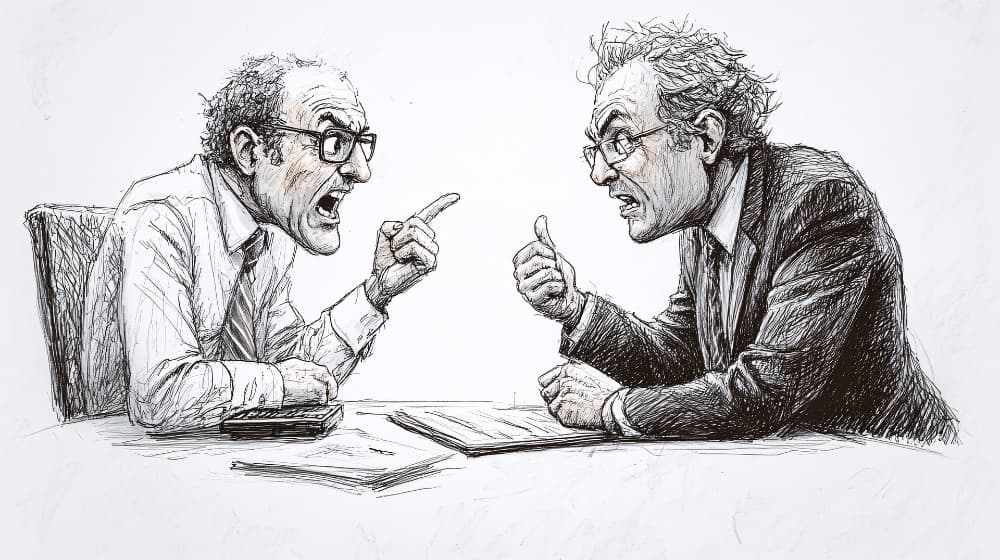
But it's real, it's happened more than once, and it's worth being honest about, because most agencies won't tell you what actually makes them walk away from money.
It's never really about difficulty
People assume the clients we've parted ways with were "difficult" — demanding, particular, hard to please. That's not it. Some of our best long-term relationships are with founders who push back hard, ask tough questions, and expect a lot. That's not a red flag. That's someone who cares about what they're paying for.
What actually ends a project is something closer to bad faith. A client who agrees to a scope, then treats every subsequent request as if it was always included, and gets hostile when told otherwise. Someone who skips two rounds of feedback, then blames the team for building "the wrong thing" when what shipped matched exactly what was signed off. A founder who talks to developers like they're disposable — sharp with juniors in a way they'd never be on a call with us directly.
That last one is close to a hard line for us. We've built this team on the idea that everyone on it deserves to be spoken to like a professional, not an inconvenience. A client who can't manage that, no matter how much they're paying, is telling us something true about what the rest of the relationship will look like.
The moment it usually happens
It's rarely the first missed expectation. It's the second or third time the same pattern repeats after we've already named it directly — because we do try to name it directly, first. "Here's what's outside the original scope. Here's what it'll cost to add it. Here's why we can't keep absorbing changes that were never part of the agreement." Most clients hear that and adjust, because most people are reasonable once the boundary is actually stated instead of just felt.
The ones who don't adjust are the ones we eventually part ways with. Not out of pride. Out of the very practical fact that a project built on a relationship that's already broken doesn't tend to produce good work anyway — for either side.
What this actually costs us, and why we do it anyway
Turning down or walking away from paying work is not free. We're a seven-person team; every project matters to the business in a way it might not at a bigger shop that can absorb a bad client as a rounding error. So this isn't a costless stance we're striking for the blog post. It's an actual trade-off we've made more than once.
We make it because the alternative is worse for everyone who isn't that client. A team that's being run ragged by one bad relationship builds worse work for every other client on their plate at the same time. Keeping a toxic project alive to protect one invoice quietly taxes every other project we're responsible for.
What we're actually telling you with this
If you're reading this as a prospective client, the point isn't "don't disagree with us" — disagree all you want, that's normal and usually makes the work better. The point is closer to: we will name a problem directly before it becomes one we can't work through, and if it keeps happening after that, we'll walk, even though that costs us. That's not a threat. It's information about how we operate, which is exactly the kind of thing you'd want to know about any team before you hand them a project.
We'd rather you know that going in than find out the hard way that we don't.
Want to know if we're actually the right fit for how you work? Book a free 30-minute strategy call — we'll tell you honestly, in both directions.
Image by Tyli Jura
Was this article helpful?
More articles like this
 Business Development
Aug 8, 2026 · 4 min read
5 Questions to Ask Before You Hire Any Dev Agency (We'll Answer Them About Ourselves)
Most agency websites are built to answer the questions that make them look good. Team photos, client logos, a carousel of five-star testimonials. What they're less eager to answer are the questions that actually matter before you sign a contract and hand over a deposit.
 Business Development
Aug 8, 2026 · 3 min read
How Nigerian Devs Actually Get Paid (And Why That's Not Your Problem)
There's a question almost nobody asks us directly, but we can feel it sitting underneath the actual questions. Someone from the US or UK will ask about timeline, or team size, or whether we've built something like theirs before. And somewhere in there, unspoken, is the real one: how does this even work, logistically? Do I wire money to Nigeria? Is that safe? What if something goes wrong?
 Business Development
Jul 29, 2026 · 3 min read
WordPress, Wix, or Custom Build? A Straight Answer for Nigerian SMEs
This question lands in our inbox almost every week, usually from someone who's already gotten three different answers from three different developers, all delivered with total confidence, all pointing in different directions. So let's actually answer it, without the sales pitch attached to any of the three options.