Port Harcourt's Quiet Tech Scene: Why We Built Busyexpand Here, Not Lagos
People assume we're in Lagos. It's a fair assumption — most Nigerian tech companies that work with international clients are. When I tell them we're based in Port Harcourt, there's usually a small pause, and then the actual question underneath it: why?
 Jay Someone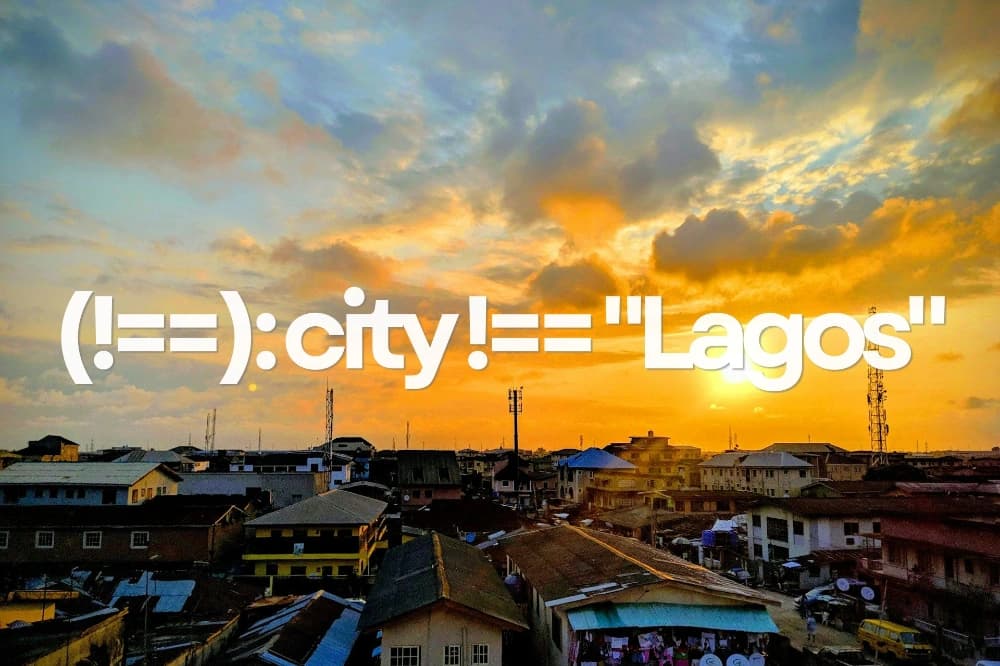
The honest answer is a mix of practical and personal, and neither part is dramatic.
This city runs on oil, not startups — and that's exactly the gap
Port Harcourt's identity has been petroleum for close to seventy years. The multinationals, the money, the entire economic gravity of the city has historically pointed toward oil and gas. Tech, when people think about it here, is still often filed under "side hustle" rather than "industry." That's slowly changing — there's a real hub culture growing, places like the Ken Saro-Wiwa Innovation Hub running training and community events for developers and designers who'd otherwise have nowhere to gather. But it's still early. It's still quiet, relative to what's happening a few hundred miles up the coast.
Quiet isn't the same as empty, though. It means there's talent here that hasn't been fully absorbed by an ecosystem yet — good developers, designers, and operators who'd otherwise have to relocate to Lagos to find serious work. We didn't have to go find that talent somewhere else. It was already here, mostly unclaimed.
Lagos is a great place to compete. We didn't want to compete for people.
Lagos has the funding, the density, the name recognition — and also the crowding. More agencies, more competition for the same senior developers, higher costs for office space, transport, everything that goes into running a team day to day. None of that is a criticism of Lagos. It's just a different set of trade-offs than what we wanted.
Building in Port Harcourt meant we could pay our team well by local standards without needing Lagos-level overhead to do it. That matters more than it sounds like it should — it's a big part of why the same seven people have stayed with us since we started, instead of the constant churn you see at agencies where good developers get poached the moment a bigger Lagos shop notices them.
The work doesn't care where you're sitting
The actual argument for being here is almost boring: none of our clients — in the US, UK, Canada, or UAE — have ever needed us to be in Lagos. They needed the site to load fast, the sprint to ship on time, and someone to answer honestly when something went wrong. City didn't factor into any of that. Once you accept that the work is fundamentally remote and the deliverable is the same either way, "where's the cheapest, most sustainable place to build a strong team" becomes a much more useful question than "where's the most famous place to be based."
There's also something we didn't expect going in: being from Port Harcourt, not Lagos, occasionally works in our favor with clients who've had a rough experience with a bigger, flashier agency before. We're not trying to be the loudest name in Nigerian tech. We're trying to be the one that actually finishes what it started.
We're not trying to prove a point about the city
We're not on a mission to put Port Harcourt on the map, and we'd be lying if we said that's why we're here. We're here because this is home, the team we built is strong, the costs make sense, and nothing about serving clients four time zones away requires us to be anywhere else. If the city's tech scene grows because a few more companies like ours stick around and build seriously instead of relocating the second they get traction — that's a nice side effect. It's just not the reason.
The reason is simpler than that. This is where we started, the work has been good, and we haven't found a real argument for leaving.
Based wherever, built for you: start a project or book a free strategy call — the team you'd be working with doesn't change depending on your time zone.
Photo by Namnso Ukpanah
Was this article helpful?
More articles like this
 Business Development
Aug 8, 2026 · 4 min read
5 Questions to Ask Before You Hire Any Dev Agency (We'll Answer Them About Ourselves)
Most agency websites are built to answer the questions that make them look good. Team photos, client logos, a carousel of five-star testimonials. What they're less eager to answer are the questions that actually matter before you sign a contract and hand over a deposit.
 Business Development
Aug 8, 2026 · 3 min read
How Nigerian Devs Actually Get Paid (And Why That's Not Your Problem)
There's a question almost nobody asks us directly, but we can feel it sitting underneath the actual questions. Someone from the US or UK will ask about timeline, or team size, or whether we've built something like theirs before. And somewhere in there, unspoken, is the real one: how does this even work, logistically? Do I wire money to Nigeria? Is that safe? What if something goes wrong?
 Business Development
Aug 5, 2026 · 3 min read
We Fired a Client. Here's What They Did to Deserve It.
We're not going to name the client. We're not even going to tell you it's one client — honestly, it's a composite of a few, because the pattern that gets a project ended isn't usually one dramatic incident. It's smaller than that, and it repeats more often than you'd think.