Custom Software vs Off-the-Shelf for Nigerian Businesses
 Ama Powell
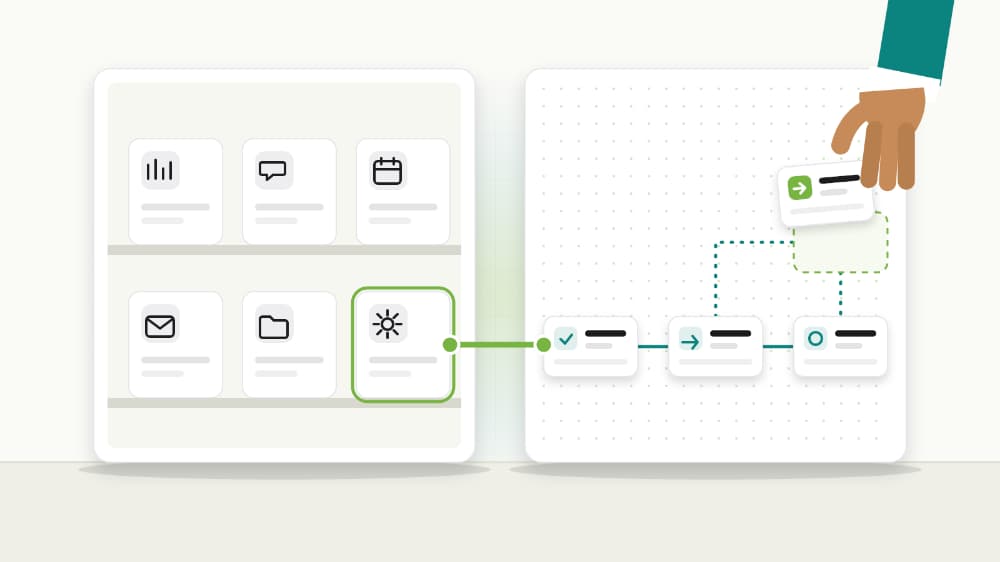
Most Nigerian founders ask this the wrong way: "Should we build custom software or buy something ready-made?" The better question is smaller. For this one workflow, what is the cheapest option that still fits how we work?
Answer it workflow by workflow and the decision gets easier. Buy what is standard, build what makes you different, and connect the two. Here is how to do that, including a five-year cost check and a new Nigerian guideline worth knowing.
The short answer
Option | Choose it when | Main risk |
|---|---|---|
Buy (off-the-shelf) | The process is common to most businesses: accounting, payroll, email marketing, CRM | Bending your process to the product, or paying for customisation that breaks on upgrade |
Integrate | Your tools work well alone but staff re-type data between them | Fragile connections and no clear "source of truth" |
Build (custom) | The process is how you win, no product fits without deep changes, or the software is the product you sell | Scope creep, and nobody funded to maintain it |
Promatics advises deciding "one capability at a time": a common result is to buy the ERP and CRM, integrate them, and build one small application for the part that is truly yours (Promatics). TrueWeb says cost is secondary: if a product fits well enough, buy; if not, build (TrueWeb).
Step 1: Split your business into workflows
List the workflows your team repeats every week: quoting, invoicing, onboarding, dispatch, bookings, approvals, reporting. For each one, ask:
Would customers notice if we did this differently? If not, it is a utility. Buy it.
Do our rules change often, and are they specific to us? Frequent, unusual rules favour building or extending.
Is this the product we sell? If customers use the software itself, it is a product, and you will want to own it.
Zamkah's test: document one full workflow with real examples, then ask each vendor to demo your scenarios, not their feature list (Zamkah).
When off-the-shelf is the right call
Buy when the function is generic and the vendor knows it better than you can. TrueWeb lists accounting and invoicing, email marketing, CRM, and HR and payroll as the usual candidates, and notes that purpose-built local products cover Nigerian payroll and statutory deductions. Building an accounting module is expensive, and its complexity is easy to underestimate.
Before you commit to custom work, push configuration as far as it goes: custom fields, workflow automation and integrations. Many businesses that think they need custom software need a well-configured tool, at a fraction of the cost.
Our view: if a ready-made tool does most of the job today, start there and replace it later with something built around real usage. It is also why we are wary of oversized first builds (see The "MVP" You Were Sold Was Actually Just an Unfinished Product).
When custom software is worth it
Build when at least one of these is true:
The workflow is your edge. A dispatch method, pricing logic or approval chain that competitors do not have is hard to express in a generic tool.
No product fits your context. Think of branch-level approvals or customers who work through WhatsApp.
You are building a product, not running a function. Software you sell, license or offer to customers should be yours.
You need to join many systems. If several tools have no native connector, a purpose-built layer can cost less than stacked integration subscriptions.
You are paying per user for a team that keeps growing. One Lagos studio argues custom ERP becomes cheaper than off-the-shelf after three to five years for teams of 30 or more users (Nexoris). That is a vendor's claim, so test it with your own numbers.
If none apply, you probably do not need custom software yet. If several do, read How to Choose a Software Development Company in Nigeria before you ask for quotes.
The middle path: extend a platform
A third route: start from an open-source business system and extend it. ERPNext, for example, is open source and includes accounting, inventory, payroll and customer records (ERPNext docs).
This can give a close fit without starting from zero, but read the fine print. Odoo's pricing page lists implementation services and "maintenance of custom code" as not included in its plans (Odoo pricing). Every customisation still has to survive every upgrade.
Compare the real cost over five years
A low first invoice is not a low cost. Put both options on one sheet and count the same things for five years:
Five-year cost = setup + (monthly fees × 60) + integrations + training + support + the cost of leaving
Bought product: subscription tiers, per-user charges, add-ons, implementation, data migration and admin time. Odoo, for instance, prices per user per month in US dollars. If your revenue is in naira, ask what happens to the bill when the exchange rate moves. Promatics flags the same exposure.
Custom software: discovery, design, build, hosting, security updates, fixes and future changes. Nexoris suggests adding 30 to 100% of licence cost for setup, training and migration on bought ERP systems. Treat that as a prompt to ask, not a fact about your project.
Both: staff time lost to workarounds. A cheap tool that forces re-typing in three places is not cheap.
Published naira ranges for ERP and custom builds vary widely and mostly come from sellers, so we do not repeat them. Get two or three written quotes for the same scenario and compare them on your own sheet. Our mobile app cost guide shows how to read quotes.
Check ownership and your exit before you sign
Whichever way you go, ask four questions:
Can we export all our data in a usable format, including attachments? Odoo says you can download a backup of an Odoo Online database at any time.
Who owns the code? Custom software does not automatically give you unrestricted rights. Zamkah advises recording rights to source code, deployment accounts, documentation and data in the contract.
Whose name are the accounts in? Domains, hosting, app stores and payment accounts should belong to your business.
Could another supplier run it from the handover material? An undocumented custom app can lock you in as much as an inflexible product.
One Nigerian rule to check: the NITDA software guideline
NITDA signed a National Software Development Guideline on 14 July 2026. It applies to software "developed, procured, modified, integrated, interfacing with, or deployed for use in Nigeria", so it covers bought software as well as custom builds. It sets minimum requirements for a structured development lifecycle, testing, secure coding and documentation, including requirements, architecture, API and backup and recovery documents. Finance, healthcare and education are named as regulated sectors (NITDA).
The document says it takes effect on a date NITDA issues, so check its status before relying on it. Either way, it is a good filter: ask any vendor, local or foreign, what documentation and testing you will get. This is general information, not legal advice.
Start with one workflow, not the whole system
The cheapest way to test custom software is to build one workflow and use it. That is how we structure our Dedicated Product Team plans: Start is $5,000 for a 4-week cycle with one or two developers, aimed at validating an idea or building a single feature. Advance is $25,000 for a 6 to 8 week cycle with a cross-functional team, delivery manager and structured QA. Scale is by request.
After launch, software needs care: updates, backups, security patches and small changes. That is what Product Care covers, and What Happens After Launch explains what to budget. Not sure you need a dedicated team? Read 5 Signs You're Ready for a Dedicated Product Team.
FAQ
Is custom software always more expensive than off-the-shelf?
Upfront, usually yes. Over several years it depends on user count, how much you would customise a product, and whether your tools are priced in dollars. Compare five-year totals, not first invoices.
Can a small business in Nigeria afford custom software?
Yes, if you build one workflow first instead of a full system. A small, well-scoped build that removes a real bottleneck is easier to justify than a big platform.
Can we start with a product and build later?
Yes. Plan data export and integrations from day one, and keep processes documented so a later move does not depend on the old tool.
Do we own the source code of custom software?
You should, but only if the contract says so. Ask for the repository, deployment accounts and documentation in your business's name.
How do I know if my workflow is unique enough to build?
If customers would not notice a different process and a product covers the steps with configuration, it is not. If your rules are specific, change often and no product fits without deep changes, it may be.
Get an honest answer for your workflow
Tell us about one workflow that slows your team down. We will say whether we would buy, integrate or build, and what we would do first. Start a project or book a call at busyexpand.com, or see our services and portfolio. Busyexpand is based in Port Harcourt and has shipped 20+ digital products for founders and businesses.
Sources
Promatics Technologies, "Build, buy or integrate your business software?" (29 Sep 2026): https://promatics.ng/insights/build-buy-integrate/
Zamkah Technologies, "Custom Software vs Off-the-Shelf Software for Nigerian Businesses" (5 Sep 2026): https://zamkah.ng/insights/custom-vs-off-the-shelf-software-nigeria
TrueWeb Solutions, "Custom Software vs Off-the-Shelf: A Nigerian Business Owner's Guide" (10 Jun 2026): https://app.trueweb.com.ng/blog/custom-software-vs-off-the-shelf
Nexoris Technologies, "ERP Software in Nigeria 2026: Custom vs Off-the-Shelf" (vendor claims): https://www.nexoristech.com/insights/custom-erp-software
ERPNext documentation, "What is ERPNext?": https://docs.erpnext.com/docs/user/manual/en/introduction
Odoo, Pricing: https://www.odoo.com/pricing
NITDA, National Software Development Guideline (signed 14 July 2026): https://nitda.gov.ng/wp-content/uploads/2026/08/National-Software-Development-Guideline-Signed.pdf
Busyexpand Services: https://www.busyexpand.com/services#featured
Was this article helpful?
More articles like this
 Software Development
Oct 24, 2026 · 8 min read
Paystack or Flutterwave Integration: A Founder's Guide
 Software Development
Oct 23, 2026 · 8 min read
How to Choose a Software Development Company in Nigeria
 Software Development
Oct 23, 2026 · 8 min read