Paystack or Flutterwave Integration: A Founder's Guide
 Ama Powell
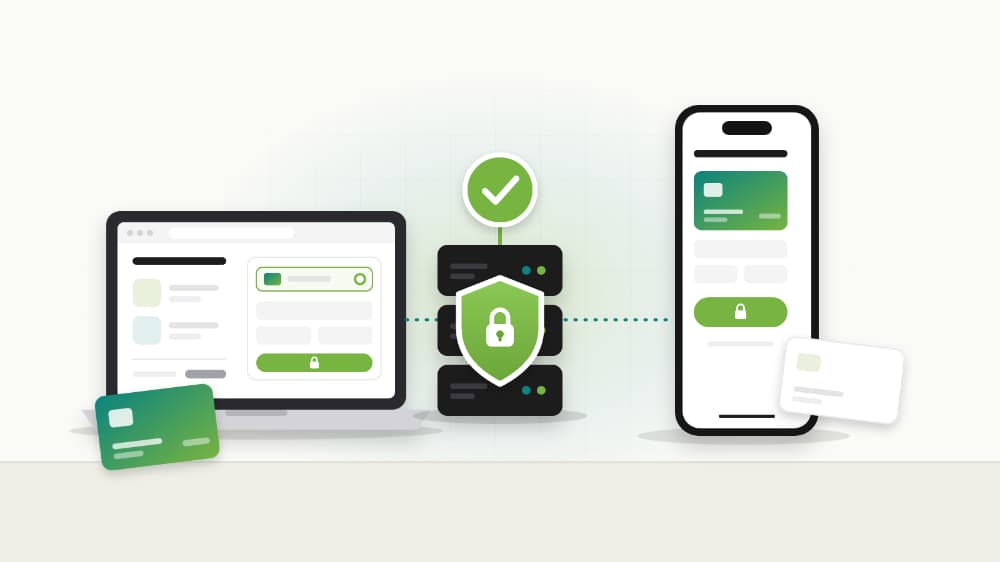
Adding Paystack or Flutterwave to a website or app is rarely the hard part. Paystack says it costs nothing to integrate, with no integration or maintenance fee (Paystack pricing). What goes wrong is everything around the code: the wrong account type, a checkout that trusts the browser, a missing webhook, or fees nobody put in the price list.
This guide is for founders about to brief a developer. It compares the two gateways on published fees, lists the decisions to make before any code, and explains how a safe integration works.
The short answer
Both gateways work well for Nigerian businesses. Pick the one whose fees and coverage suit your average order and your customers, then spend your effort on the integration itself. The safe pattern is the same for both: create the payment on your server, let the customer pay, then confirm the payment on your server before you deliver anything.
Paystack vs Flutterwave at a glance
These figures come from each provider's Nigeria pricing page, checked on 24 October 2026. Fees change, so confirm them before you budget.
Paystack | Flutterwave | |
|---|---|---|
Local card payments | 1.5% + ₦100, with the ₦100 waived under ₦2,500 and the fee capped at ₦2,000 | 2% (1.4% transaction fee + 0.6% platform fee) |
International cards | 3.9% + ₦100 | 4.8% |
VAT | Not stated on the pricing page we checked | Fees are subject to 7.5% VAT |
Local settlement | Next working day (T+1) | Next day for local payments |
Payment methods listed | Card, bank account, transfer, USSD, POS, Apple Pay, Google Pay, Visa QR, mobile money | 15+ options including cards, bank transfer, USSD, mobile money, POS, M-Pesa and Visa QR |
Currencies | International cards settle in naira by default. A public pilot offers USD settlement to Zenith Bank domiciliary accounts | Accepts 30+ currencies. International cards settle in your local currency by default |
Sources: Paystack pricing, Flutterwave Nigeria pricing.
What the fees mean at different order sizes
Using the published local rates only (no VAT, no volume discounts), the maths looks like this:
Order value | Paystack fee | Flutterwave fee |
|---|---|---|
₦5,000 | ₦175 | ₦100 |
₦20,000 | ₦400 | ₦400 |
₦50,000 | ₦850 | ₦1,000 |
₦200,000 | ₦2,000 (capped) | ₦4,000 |
For small baskets Flutterwave's percentage is cheaper. Around ₦20,000 they are equal. For larger tickets, Paystack's cap makes it cheaper. Paystack mentions volume discounts for large merchants, so ask either provider. Check your own average order before deciding, and build the fee into your prices.
Before any code: six decisions
Write these down first. They turn an open-ended project into a scoped one.
Account type. Paystack offers Starter Business and Registered Business accounts. In Nigeria, a Starter account has a collection limit of ₦8,000,000 and no access to Transfers or terminals. When you reach the limit, payments are disabled until you upgrade to a Registered Business (Paystack business types).
Whose name is on it. Register the account in your business's name, not a staff member's, so access survives people leaving. Paystack requires matching names across ID, BVN and bank account for Starter accounts. Registered businesses submit CAC documents, a TIN, director details and proof of address (Paystack compliance requirements).
Special certificates. Paystack asks businesses in listed categories to provide a SCUML certificate before activation. The list includes hotels, car dealers, real estate dealers and agents, construction companies and consulting companies. Check early, because it can delay go-live.
Where settlements go. Decide the bank account, who reconciles it daily, and who sees the dashboard.
What happens after payment. Define the success, failure and abandoned flows: receipt email, order status, booking confirmation, account activation.
Refunds and disputes. Write the rules and name the person who handles them. Paystack raises dispute and refund events your system can react to.
How a safe integration works
The flow is the same on both gateways. Paystack's documentation describes three steps: initialise the transaction from your backend, complete it, then verify it (Paystack: Accept payments).
Step 1: Create the payment on your server
Your server calls the gateway with the amount, customer email and a unique reference. Never put your secret key in a web page or mobile app. Paystack says all API requests must come from your server. Also note the units: Paystack amounts are in the smallest denomination, so ₦5,000 is sent as 500000.
Step 2: Let the customer pay
On the web you can use the gateway's popup or redirect the customer to its hosted checkout page. In a mobile app, your server returns an access code and the Paystack Android or iOS SDK shows the payment sheet.
Step 3: Confirm the payment before delivering
A customer landing on your success page proves nothing. Paystack states that visiting the callback URL "doesn't prove that transaction was successful", and tells you to call its verify endpoint, then check the status and the amount (Paystack: Verify payments). Flutterwave advises the same, checking status, amount, currency and transaction reference against your own order before confirming it (Flutterwave: Webhooks).
Step 4: Use webhooks as the safety net
Customers close tabs and lose signal. A webhook lets the gateway tell your server when a payment succeeds, even if the customer never returns. Paystack recommends webhooks over callbacks and polling. A good webhook handler:
Verifies the sender. Paystack signs events with an HMAC SHA512 header. Flutterwave sends a secret hash header that you compare against your own value.
Replies with 200 quickly, then does slow work in the background. Paystack retries failed live events every 3 minutes for the first four tries, then hourly for up to 72 hours. Flutterwave times out after 60 seconds, and its retries are opt-in: three attempts, 30 minutes apart.
Is idempotent. The same event can arrive twice, so a customer must never get two orders for one payment.
Has a backup. Flutterwave suggests a scheduled job that checks pending transactions, in case your endpoint is down.
Mistakes that cost money
Trusting the redirect instead of verifying the payment.
Letting the browser decide the amount.
Skipping webhooks, then losing orders when connections drop.
Delivering twice because the handler is not idempotent.
Mixing test and live keys, or leaving keys in front-end code.
Registering the gateway account under an individual's name.
Not including gateway fees in your pricing.
Having no refund process or daily reconciliation.
Which one should you choose?
Your situation | What to do |
|---|---|
Mostly Nigerian customers, larger average orders | Compare Paystack's capped fee first |
Many small payments | Compare Flutterwave's flat percentage |
Customers or revenue in several countries and currencies | Check each gateway's country and currency coverage for every market you sell in |
Not sure yet | Keep payments in one isolated part of the code, so you can add or swap a gateway later |
Keeping payments isolated is cheap to do early and costly to retrofit.
What it takes to build
The gateway side is free to integrate on Paystack. The real work is developer time: checkout, order states, webhooks, refunds, admin reporting and testing in both test and live modes. Payments are part of a bigger build, so budget for them as part of the app or site. Our mobile app cost guide and web app budget post show how to plan the rest.
Still choosing what to build? Read Website, Web App, or Mobile App?. Once live, payments need ongoing care, which What Happens After Launch covers.
FAQ
How much does it cost to integrate Paystack?
Paystack says integration is free. You pay transaction fees plus whatever it costs a developer to build and test the checkout, webhooks and admin tools around it.
Is Paystack or Flutterwave cheaper in Nigeria?
It depends on order size. On published local rates they are equal at ₦20,000, Flutterwave is cheaper below that, and Paystack is cheaper above it. Volume discounts and VAT can change the result.
Can I accept payments without a registered company?
On Paystack, yes: a Starter Business account needs ID, BVN and a personal bank account, with a ₦8,000,000 collection limit in Nigeria. Upgrade to a Registered Business to remove the limit.
Do I need a webhook if I already verify the payment?
Yes. Verification covers customers who come back to your site. Webhooks cover those who do not, such as when the connection drops or the tab closes.
Can I use both Paystack and Flutterwave?
Yes, if your payment code is built for it. It can give you a fallback and let you compare fees on real orders.
Can I take payments in a mobile app?
Yes. Both gateways offer ways to complete payment inside an app. Your server should still create the payment and confirm it, and secret keys must stay off the phone.
How long does a payment integration take?
It depends on scope. A single checkout is much smaller than a marketplace with splits, subscriptions and refunds. Ask your developer to break it into checkout, webhooks, order states and admin tools.
Get payments built right
Tell us what you sell, who pays and where. We will outline the checkout, the webhooks and the admin tools you need. Start a project or book a call at busyexpand.com, or browse our services and portfolio. Busyexpand is based in Port Harcourt and has shipped 20+ digital products. Our Dedicated Product Team plans start at $5,000 for a 4-week cycle.
Sources
Paystack, Pricing (opened 24 Oct 2026): https://paystack.com/pricing
Flutterwave, Nigeria pricing and fees (opened 24 Oct 2026): https://flutterwave.com/ng/pricing
Paystack docs, Accept payments: https://paystack.com/docs/payments/accept-payments/
Paystack docs, Verify payments: https://paystack.com/docs/payments/verify-payments/
Paystack docs, Webhooks: https://paystack.com/docs/payments/webhooks/
Flutterwave docs, Webhooks: https://developer.flutterwave.com/docs/webhooks
Paystack Support, Paystack business types: https://support.paystack.com/en/articles/2128898
Paystack Support, Compliance requirements for Nigeria: https://support.paystack.com/en/articles/2123970
Busyexpand Services: https://www.busyexpand.com/services#featured
Was this article helpful?
More articles like this
 Software Development
Oct 24, 2026 · 8 min read
Custom Software vs Off-the-Shelf for Nigerian Businesses
 Software Development
Oct 23, 2026 · 8 min read
How to Choose a Software Development Company in Nigeria
 Software Development
Oct 23, 2026 · 8 min read